Adler Special Children’s Center Curriculum
Our Curriculum
Structured to meet the New York State Prekindergarten Early Learning Standards, this program supports every facet of student development through thoughtfully chosen, research-backed frameworks and curricula. The following curricula will be embedded throughout the program: To monitor and support individual growth, the program integrates ARIS:
• Observations Begin: From the start of the year, staff begin observational assessments to document children’s developmental levels, interests, and progress.
• Data-Informed Instruction: Collected data informs small group planning, individualized support, and family communication, ensuring every child receives appropriate scaffolding.
• Progress Monitoring: Teachers use ARIS data in conjunction with IEP goals and Creative Curriculum checkpoints to regularly adjust instruction and interventions. This directly aligns with the Prekindergarten’s early learning standards emphasis on developmentally appropriate practice and data-driven instruction.
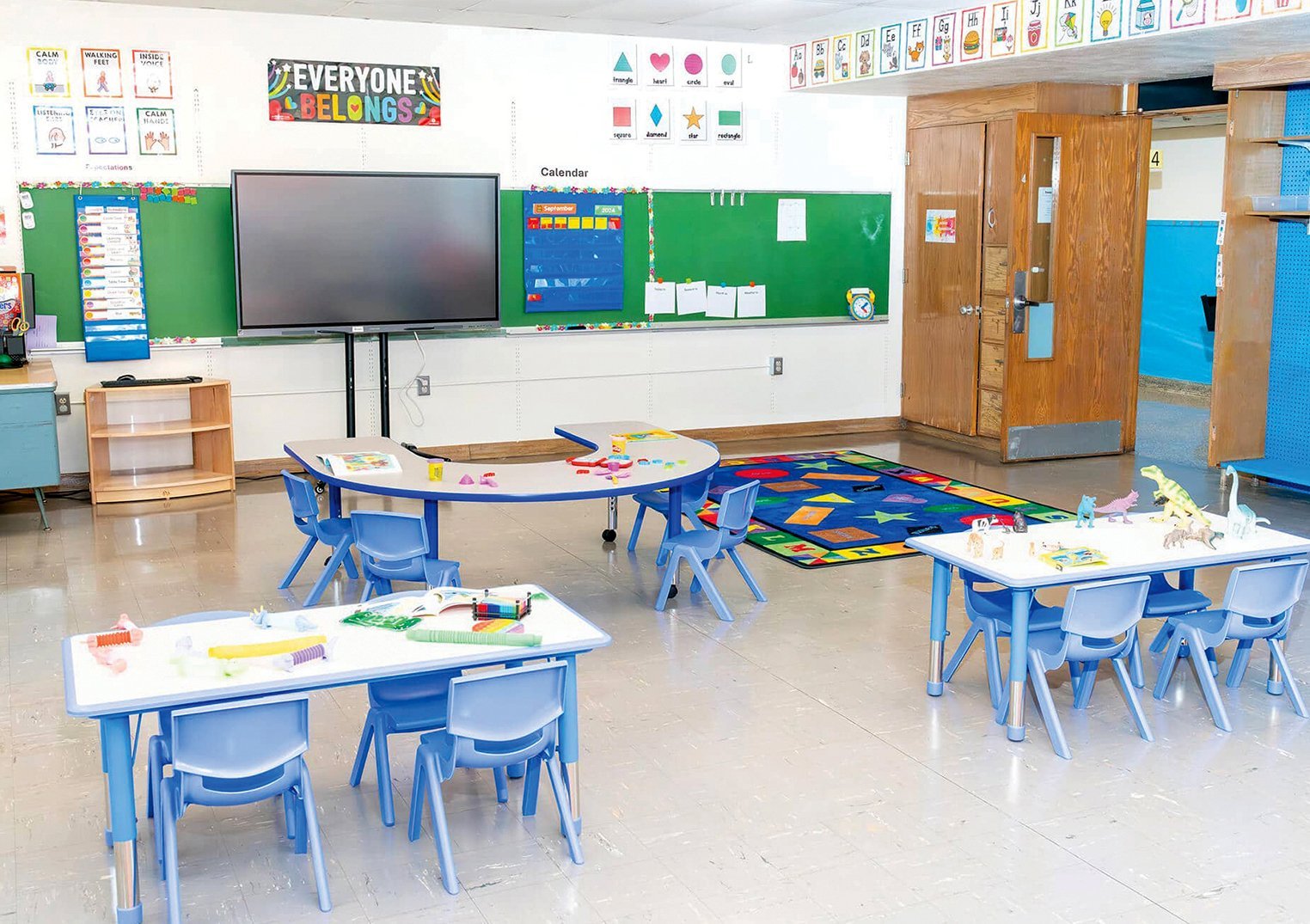
The Creative Curriculum is the foundation of the program’s instructional approach, ensuring alignment with Prekindergarten Early Learning standards through: Interest-driven investigations: Children engage in thematic studies (e.g., buildings, trees, clothing) that integrate literacy, math, science, and social studies content. • Whole group, small group, and individualized instruction: Activities are differentiated based on developmental levels and aligned with the Prekindergarten Early Learning Standards benchmarks across domains. • Integrated learning centers: Classrooms include purposefully designed learning centers (e.g., dramatic play, block area, writing center) that promote exploration, collaboration, and skill development across all domains. • Family partnerships: Families are engaged as partners through take-home activities, newsletters, and participation in classroom projects, supporting the Family Engagement component of the Prekindergarten Early Learning Standards.
To support the individual learning styles of each student, Discrete Trial Teaching (DTT) is used to break down complex skills into smaller, teachable components, allowing for individualized, repeated practice and reinforcement. While traditionally more structured, DTT sessions in our classrooms are designed to be play-based, interactive, and embedded within natural routines and thematic activities that are meaningful and engaging for young children.
- To target communication and language development (aligned with the Language and Literacy domain), DTT may include picture identification, following simple directions, or labeling items during play routines or storybook activities.
- In Mathematics domain, DTT may involve sorting, count objects, or identifying shapes using manipulatives and age-appropriate games.
- Approaches to Learning are supported by reinforcing attention, persistence, and task completion in short, positive, and achievable trials.
- Social-emotional skills are incorporated by embedding opportunities for turn-taking, responding to peers, and following group directions during DTT sessions within structured group play or classroom centers. All DTT instruction is carefully individualized based on each child’s IEP goals, developmental level, and interests. Trials are kept brief, engaging, and highly motivating, using preferred materials and frequent reinforcement to maintain student engagement and foster a positive learning environment. Instructional targets are chosen to align with both IEP goals and the NYS Prekindergarten Early Learning Standards, ensuring that children are building the foundational skills necessary for kindergarten readiness while receiving the individualized support they need to succeed.
The program has designed a Holistic, Aligned Approach that thoughtfully integrates:
*NYS Prekindergarten Early Learning standards for academic and developmental growth. *Pyramid Model practices to create a nurturing, emotionally responsive environment. *PBIS strategies to reinforce positive behavior and classroom community. *ARIS tools for assessment, documentation, and intervention. *Creative Curriculum for inquiry-based, standards-aligned learning. *Discrete Trial Teaching for breaking down complex s. s into smaller, teachable components, allowing for individualized, repeated practice and reinforcement. Together, these frameworks ensure a high-quality early childhood education that promotes readiness for kindergarten and supports every child’s individual growth in inclusive, supportive classrooms.